Amplifier Type Explained: What It Means for Stereo Amplifiers
As Amazon Associates, we earn from qualifying purchases. This means we may receive a small commission at no extra cost to you if you click through and make a purchase.
As an Amazon Associate we earn from qualifying purchases. Links on this page are affiliate links.
Understanding Amplifier Type Explained
The amplifier type explained helps you choose the right heart for your audio system. This spec defines how the device boosts weak signals into powerful sound waves. You will see three main categories on most shopping pages: integrated, tube, and streaming models. Each serves a different listening need.
An integrated amplifier combines a preamplifier and a power amplifier in one chassis. This design saves space and reduces cable clutter. You get volume control, input switching, and speaker amplification in a single box. This is the standard choice for most stereo setups. It offers a straightforward connection to your speakers and source components.
Tube amplifiers use vacuum tubes to amplify the signal. These devices often appeal to listeners who prefer warm, rich tones. The tubes generate heat and require periodic replacement. You must ensure your room can handle the extra warmth. Tube amps often deliver a distinct sonic character that solid-state units do not. They are a niche choice for audiophiles seeking specific tonal qualities.
Streaming amplifiers include built-in Wi-Fi and Bluetooth connectivity. They allow you to play music directly from digital services or your phone. You do not need a separate streamer or network player. These units often support high-resolution audio formats. They simplify your setup by combining amplification with network access. This is ideal for modern, wireless-heavy homes.
When you compare products, look at the amplifier type label. It tells you the core architecture of the device. Integrated units are versatile. Tube amps offer specific tonal traits. Streaming models add convenience. Your choice depends on whether you prioritize space, sound character, or digital connectivity. Understanding this spec ensures you buy a unit that fits your room and your listening habits. It prevents you from purchasing a complex system when you want simplicity, or a simple unit when you want high-tech features.
Integrated, Tube, and Streaming Amps
Integrated
An integrated amplifier combines a stereo amplifier and a preamp into one chassis. This design simplifies your setup by reducing the number of cables and components you need to connect. You get a single device that handles both signal processing and power amplification. The Yamaha A-S501 is a practical example. It offers 85 W of output and includes a phono stage for turntables. This type suits listeners who want a traditional, wired stereo experience. The trade-off is that you miss out on built-in wireless streaming capabilities. You must connect your digital sources separately.
Tube
Tube amplifiers use vacuum tubes to amplify audio signals. This technology often produces a warmer, richer sound that many audiophiles prefer. The tubes operate at high temperatures and require periodic replacement. Some models, like the Dayton Audio HTA200, use a hybrid design. They combine tube preamplification with solid-state power amplification. This approach offers tube warmth while maintaining reliable power output. The Muzishare X7 is another option, featuring KT88 tubes for high-fidelity sound. These amps suit vinyl enthusiasts and those who value tonal character. The trade-off is that they are typically heavier and less efficient than solid-state units. They also lack modern streaming features unless added externally.
Streaming
Streaming amplifiers are designed primarily for digital audio sources. They include built-in DACs and wireless connectivity for apps and services. The WiiM Amp is a clear example. It connects to passive speakers and supports HDMI ARC for TV audio. This type suits users who prioritize convenience and room correction over raw power. The WiiM Amp Ultra adds 100 W output and hi-res audio support. These amps fit small to medium rooms where volume is less critical. The trade-off is that they often have lower wattage than traditional amplifiers. They also focus on software features rather than analog input flexibility.
Who Needs This Spec
Who needs it
You should prioritize amplifier type when building a specific signal chain. Integrated amps suit those wanting a clean, single-component setup. You get both preamp and power amp functions in one box. This reduces clutter and simplifies connections for your stereo system. Tube amplifiers appeal to listeners who value warm, harmonic-rich sound. If you prefer analog warmth over digital precision, this type delivers that character. Streaming amplifiers are essential for modern, wire-centric homes. You want to play music from services directly without extra DACs or receivers. This spec matters if you care about sound character and connectivity. It defines how your source material reaches your speakers. Choosing the right type ensures your system matches your listening habits and room layout. It prevents buying redundant gear or missing key features.
Who can skip it
You can ignore this spec if you already own separate preamps and power amps. Your system is already modular, so amplifier type is irrelevant. You might also skip it if you only use passive speakers with a dedicated receiver. In those cases, the receiver handles all amplification needs. Prioritize speaker efficiency and room size instead. If you are buying bookshelf speakers, focus on their power handling. For floor-standers, look at bass response and dispersion. Do not worry about whether the amp is tube or solid state if you use a separate component. Focus on total system synergy. Check impedance matching and damping factors. These technical details impact performance more than the amplifier category label. Your listening preference for sound signature is secondary to proper system integration. Ensure your sources match your speakers first. Then consider amplification type as a final refinement step.
Amplifier Type Glossary
Integrated Amplifier
Combines a preamplifier and power amplifier in one chassis. This design simplifies your setup by reducing cable clutter and component count for a clean stereo system.
Tube Amplifier
Uses vacuum tubes to amplify signals. This technology often provides warm sound characteristics. Tubes require periodic replacement and generate more heat than solid-state designs.
Streaming Amplifier
Built-in digital-to-analog converters and network connectivity. This allows direct connection to Wi-Fi or Ethernet for high-resolution audio streaming without external sources.
Channels
Independent audio signal paths. Stereo amplifiers typically have two channels for left and right speakers. More channels enable surround sound configurations for home theaters.
Wattage
Power output measured in watts. Higher wattage drives speakers louder. Match this spec to your speaker sensitivity and room size for optimal performance.
Impedance
Electrical resistance measured in ohms. Amplifiers must match speaker impedance for safe operation. Mismatched values can cause distortion or damage to your equipment.
Input Sensitivity
The voltage level needed for full output. This spec ensures proper signal matching between sources. Incorrect sensitivity can lead to noise or distorted audio playback.
| # | Product | Best for | Price |
|---|---|---|---|
| 1 | Yamaha Silver Stereo Integrated Amplifier | Wired stereo setups with turntables | |
| 2 | Dayton Audio Hybrid Tube Bluetooth Amplifier | Vinyl lovers wanting tube warmth and Bluetooth | |
| 3 | WiiM Amp Streaming Amplifier | Streaming audio and TV integration | |
| 4 | MUZISHARE KT88 Tube Integrated Amplifier | Audiophiles seeking pure tube sound and phono inputs | |
| 5 | Rockville BluTube DK 70W Stereo Tube Amp | Listeners seeking warm tube sound with digital inputs | |
| 6 | WiiM Amp Ultra Streaming Amplifier | passive speakers needing room correction and streaming |

Yamaha Silver Stereo Integrated Amplifier
Best for: Wired stereo setups with turntables
- Amplifier Type
- Integrated
- Power Output
- 85 W + 85 W
- Digital Inputs
- Digital coax, Toslink optical
- Phono Stage
- Phono
- Features
- Amplifier
- Color
- Silver
The Yamaha A-S501 is a silver integrated stereo amplifier delivering 85 watts per channel. It features gold-plated digital coax and Toslink optical inputs alongside gold-plated analog inputs, including a phono stage. You can connect two sets of speakers using A, B, or A+B terminals. This solid-state unit suits listeners who want a clean, reliable stereo setup with versatile input options.
- 85 W output per channel
- Gold-plated digital coax and optical inputs
- Built-in phono input for turntables
- Supports Speaker A, B, and A+B
- Lower 85 W power output compared to 200 W competitors
- Heavier 22.7 lb build compared to lighter streaming amps
- No built-in Bluetooth or Wi-Fi streaming
- You want a dedicated stereo amp with phono input
- You prefer wired digital connections like optical or coax
- You need to drive two pairs of speakers
- You need built-in wireless streaming capabilities
- You require higher than 85 W power output
- You want a lighter, more compact unit
Verdict: Yamaha A-S501 Integrated Stereo Amp is a practical choice for listeners who prioritize wired connectivity and phono support over wireless streaming. It fits those who want a traditional stereo experience with reliable 85 W output.
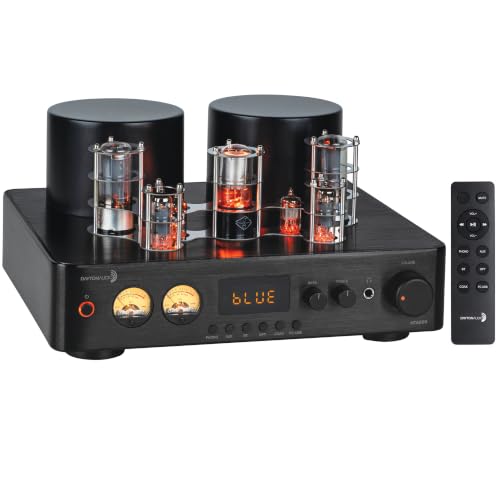
Dayton Audio Hybrid Tube Bluetooth Amplifier
Best for: Vinyl lovers wanting tube warmth and Bluetooth
- Amplifier Type
- Tube
- Power Output
- 100 W per channel RMS at 4 ohms
- Amplifier Class
- Class A/B
- Digital Inputs
- USB, optical, coaxial
- Wireless Streaming
- Bluetooth 5.0
- Phono Stage
- Built-in phono preamp
The Dayton Audio HTA200 is a hybrid tube integrated amplifier designed for stereo setups. It delivers 100 watts per channel at 4 ohms using a Class A/B output stage with vacuum tube preamplification. You get versatile inputs including Bluetooth 5.0, optical, coaxial, and a phono stage. The unit weighs 3.6 pounds and includes a wireless remote for volume and playback control.
- 100 watts per channel RMS at 4 ohms
- Hybrid tube preamp with Class A/B output
- Bluetooth 5.0 and USB DAC connectivity
- Dedicated phono input for turntables
- Includes wireless remote with motorized volume
- 100 watts per channel is lower than the 200W capacity of the YAMAHA A-S501SL
- 3.6 pound weight is lighter than typical heavy tube amps but offers less thermal mass
- Bluetooth 5.0 is older than the latest LE Audio standards found in newer streaming amps
- You want the warmth of tube preamplification without full tube output stages
- You need a phono input for a vinyl turntable
- You prefer a compact 15.5-inch wide chassis
- You require 200 watts per channel for demanding speaker setups
- You want a pure tube output stage for maximum harmonic distortion
- You need HDMI ARC connectivity for TV audio
Verdict: Dayton Audio HTA200 Hybrid Tube Stereo Amp suits listeners who want tube warmth in the preamp stage with reliable solid-state power. It fits those who value vinyl playback and wireless streaming in a single compact unit.

WiiM Amp Streaming Amplifier
Best for: Streaming audio and TV integration
- Amplifier Type
- Streaming
- Power Output
- 60 W at 8 ohms, 120 W at 4 ohms
- Digital Inputs
- HDMI ARC, optical, USB
- Wireless Streaming
- Wi-Fi, Bluetooth, AirPlay 2
- Subwoofer Output
- Sub Out
- Speaker Type
- Passive
The WiiM Amp is a streaming amplifier for passive speakers. It delivers 60 W per channel at 8 ohms or 120 W per channel at 4 ohms. You can stream lossless music up to 24-bit/192 kHz over Wi-Fi or Ethernet. It features HDMI ARC for TV audio and RoomFit room correction. This compact unit connects via optical, RCA, USB, or Bluetooth. It suits those who want high-res audio and TV integration in a small footprint.
- 60 W per channel at 8 ohms or 120 W per channel at 4 ohms
- HDMI ARC input for direct TV connection
- RoomFit room correction with graphic or parametric EQ
- Supports lossless streaming up to 24-bit/192 kHz
- AirPlay 2, Spotify Connect, and TIDAL Connect support
- Lower power output of 60 W per channel at 8 ohms compared to the 200 W Dayton Audio HTA200
- Smaller physical dimensions of 7.48 x 8.54 x 2.52 inches compared to larger tube amplifiers
- Cannot transmit AirPlay streams to other devices
- You want to stream high-resolution audio to passive speakers
- You need a direct HDMI ARC connection for your TV audio
- You prefer a compact amplifier with room correction features
- You require high power output above 120 W per channel
- You need to transmit AirPlay streams to other speakers
- You prefer tube-based amplification for warmth
Verdict: WiiM Amp Streaming Stereo Amplifier fits listeners who prioritize streaming convenience and TV connectivity over raw power. It is ideal for small to medium rooms where room correction and high-res audio matter more than volume.
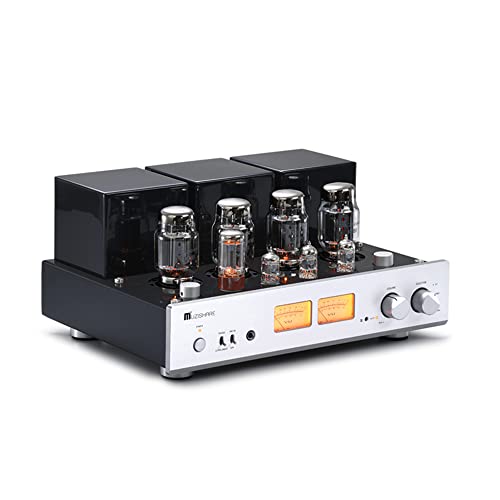
MUZISHARE KT88 Tube Integrated Amplifier
Best for: Audiophiles seeking pure tube sound and phono inputs
- Amplifier Type
- Integrated
- Amplifier Class
- AB1 push-pull
- Vacuum Tubes
- KT88 x 4, 5AR4, 12AX7, 12AU7
- Phono Stage
- MM Phono
- Connectivity
- XLR
- Features
- Amplifier, Phono Stage, Phono Input, Remote, Balanced Input
The Muzishare X7 is a handmade integrated amplifier featuring four KT88 vacuum tubes in an AB1 push-pull configuration. It includes a built-in MM phono stage and balanced XLR inputs. You can switch between Triode and Ultralinear modes to adjust sound character. The unit measures 16.1 inches in length and 7.8 inches in height. It suits listeners who prefer warm, analog sound from tube circuits.
- Four KT88 vacuum tubes for power amplification
- Balanced XLR inputs for reduced noise
- Built-in MM phono stage for turntables
- Triode and Ultralinear mode selection
- Handmade point-to-point wiring with Japanese transformers
- Uses KT88 tubes, which are larger than the tubes in competing hybrid models
- Dimensions of 16.1 x 13.2 x 7.8 inches make it bulkier than compact streaming amps
- 30-second mute delay when powering on
- You want the warm tonal character of pure tube amplification
- You own a turntable and need a dedicated phono input
- You prefer balanced XLR connections for your source components
- You need a compact footprint for small shelves
- You want immediate sound without a warm-up delay
- You prefer digital streaming features over analog tube circuits
Verdict: The Muzishare X7 KT88 Tube Integrated Amp fits audiophiles seeking high-fidelity tube sound with phono capabilities. It is ideal for those who value handcrafted components and mode-switching flexibility over compact size or streaming convenience.

Rockville BluTube DK 70W Stereo Tube Amp
Best for: Listeners seeking warm tube sound with digital inputs
- Amplifier Type
- Tube
- Power Output
- 25W x 2 RMS @ 8Ω, 35W x 2 RMS @ 4Ω
- Digital Inputs
- HDMI, optical, coaxial, USB
- Wireless Streaming
- Bluetooth 2.1+EDR
- Subwoofer Output
- subwoofer output
- Connectivity
- Bluetooth, RCA, Optical Input
The Rockville Blutube DK is a 2-channel tube integrated amplifier designed for stereo home audio. It delivers 25W RMS per channel into 8 ohms and 35W RMS into 4 ohms. The unit includes built-in Bluetooth 2.1+EDR and optical inputs. It features adjustable bass and treble controls and a VU meter. This silver amplifier suits listeners who prefer warm, tube-driven sound with flexible connectivity options.
- Tube amplification for warm, rich audio output
- 25W RMS per channel at 8 ohms
- Built-in Bluetooth 2.1+EDR streaming
- Optical and coaxial input options
- Adjustable bass and treble controls
- Bluetooth version 2.1+EDR is older than modern standards
- 25W RMS output is lower than hybrid or solid-state competitors
- 9.65-pound weight is heavier than many integrated amplifiers
- You want the specific tonal character of tube amplification
- You need optical or coaxial digital inputs for your source
- You prefer adjustable bass and treble tone controls
- You require high-resolution Bluetooth codecs like aptX or LDAC
- You need more than 25W RMS per channel into 8 ohms
- You prefer a lightweight, compact amplifier design
Verdict: Rockville Blutube DK Tube Stereo Amp offers classic tube warmth and versatile digital inputs for listeners who prioritize tonal character over raw power or modern wireless standards.

WiiM Amp Ultra Streaming Amplifier
Best for: passive speakers needing room correction and streaming
- Amplifier Type
- Streaming
- Power Output
- 100W/ch at 8Ω
- DAC Chip
- ESS SABRE
- Digital Inputs
- HDMI ARC
- Wireless Streaming
- Wi-Fi 6, Bluetooth 5.3
- Speaker Type
- Passive
The WiiM Amp Ultra is a streaming amplifier designed to power passive speakers with 100 watts per channel. It features Wi-Fi 6, Bluetooth 5.3, and HDMI ARC for flexible connectivity. The unit includes RoomFit correction to adjust sound for your space and supports hi-res audio up to 24-bit/192kHz. This silver amp suits listeners who want smart features and precise sound control without active speakers.
- 100W per channel output for passive speakers
- Wi-Fi 6 and Bluetooth 5.3 with LE Audio
- Built-in RoomFit room correction technology
- Supports up to 24-bit/192kHz hi-res audio
- HDMI ARC connection for TV integration
- 100W output is lower than the 200W capacity of the Dayton Audio HTA200
- Incompatible with AirPlay as stated in the product data
- 5.4-pound weight is heavier than the Rockville Blutube DK
- You want to upgrade passive speakers with streaming capabilities
- You need HDMI ARC for seamless TV audio integration
- You prefer room correction to balance your listening space
- You require AirPlay support for your ecosystem
- You need a tube amplifier for specific warm tones
- You prefer a compact receiver under 5 pounds
Verdict: The WiiM Amp Ultra 100W Streaming Stereo Amp fits users who want precise sound correction and modern streaming features for passive speakers. It is a solid choice for those prioritizing room calibration and hi-res audio over raw wattage.
Specifications side by side
| Spec | Yamaha Silver Stereo Integrated Amplifier | Dayton Audio Hybrid Tube Bluetooth Amplifier | WiiM Amp Streaming Amplifier | MUZISHARE KT88 Tube Integrated Amplifier | Rockville BluTube DK 70W Stereo Tube Amp | WiiM Amp Ultra Streaming Amplifier |
|---|---|---|---|---|---|---|
| Power Output | 85 W + 85 W | 100 W per channel RMS at 4 ohms | 60 W at 8 ohms, 120 W at 4 ohms | – | 25W x 2 RMS @ 8Ω, 35W x 2 RMS @ 4Ω | 100W/ch at 8Ω |
| Amplifier Class | – | Class A/B | – | AB1 push-pull | – | – |
| Vacuum Tubes | – | – | – | KT88 x 4, 5AR4, 12AX7, 12AU7 | – | – |
| DAC Chip | – | – | – | – | – | ESS SABRE |
| Digital Inputs | Digital coax, Toslink optical | USB, optical, coaxial | HDMI ARC, optical, USB | – | HDMI, optical, coaxial, USB | HDMI ARC |
| Wireless Streaming | – | Bluetooth 5.0 | Wi-Fi, Bluetooth, AirPlay 2 | – | Bluetooth 2.1+EDR | Wi-Fi 6, Bluetooth 5.3 |
| Phono Stage | Phono | Built-in phono preamp | – | MM Phono | – | – |
| Subwoofer Output | – | Full-range preamp output | Sub Out | – | subwoofer output | – |
| Speaker Type | – | – | Passive | – | – | Passive |
| Connectivity | – | Bluetooth, RCA, Optical Input | HDMI ARC | XLR | Bluetooth, RCA, Optical Input | HDMI ARC |
| Features | Amplifier | USB Recording, Phono Stage, Phono Input, Remote, Built-in Preamp, Built-in DAC | Amplifier | Amplifier, Phono Stage, Phono Input, Remote, Balanced Input | Amplifier, USB Recording | Amplifier, Hi-Res Audio |
| Channels | – | – | – | – | 2 Channel | – |
| Color | Silver | HTA200 | Amp Space Gray | – | Silver | Silver |
| Amplifier Type | Integrated | Tube | Streaming | Integrated | Tube | Streaming |
| Tube | – | – | – | KT88 | – | – |
| Recommended Use | Stereo | Stereo | TV | – | Stereo | Stereo |
| Wattage | – | – | – | – | – | 100W |
| Dimensions | 17.1 × 15.3 × 6 inches | 15.9 × 15.5 × 9.61 inches | 8.54 × 7.48 × 2.52 inches | 16.1 × 13.2 × 7.8 inches | 13.5 × 13.4 × 8.7 inches | 7.87 × 8.3 × 3 inches |
| Weight | 22.7 pounds | 3.6 pounds | 4.1 pounds | – | 9.65 pounds | 5.4 pounds |
| Model | A-S501SL | HTA200 | AMP001 | MUZISHARE X7 | Blutube DK | AMP003 |
Frequently asked questions
What is the main difference between an integrated and a tube amplifier?
Integrated amplifiers combine the preamp and power amp in one chassis for simplicity. Tube amplifiers use vacuum tubes to boost signals, often providing a warmer sound. You can see this in the Yamaha A-S501, which is an integrated unit. In contrast, the Dayton Audio HTA200 uses tubes in the preamp stage for that specific tonal character.
Do I need a tube amplifier for vinyl playback?
No, but tube amps often include phono stages. The Yamaha A-S501 integrated amp supports turntables directly. The Dayton Audio HTA200 also has a phono input. The Muzishare X7 features a dedicated phono stage. These built-in features handle the low-level signal from your record player without needing extra gear.
Can a streaming amplifier replace a traditional stereo receiver?
Yes, if you use passive speakers. The WiiM Amp and WiiM Amp Ultra are designed for passive speakers. They connect to your TV via HDMI ARC. These units handle streaming and room correction. You do not need a separate receiver or streaming device for your music sources.
What does KT88 mean in a tube amplifier?
KT88 refers to the specific type of vacuum tube used. The Muzishare X7 uses these tubes for amplification. This component influences the sound quality and power output. It is a common choice for audiophiles seeking high-fidelity tube sound. The tube type defines the amplifier's sonic character.
Is Bluetooth connectivity standard on all amplifier types?
No, it depends on the model. The Dayton Audio HTA200 includes Bluetooth. The Rockville Blutube DK also offers wireless streaming via Bluetooth. The Yamaha A-S501 focuses on wired connectivity. You must check the connectivity specs to ensure wireless support is present for your needs.
How does room correction affect my listening experience?
Room correction adjusts the sound to fit your space. The WiiM Amp Ultra includes this feature for precise sound calibration. It helps passive speakers sound better in small to medium rooms. This technology matters more than raw wattage for many users. It ensures balanced audio across different listening positions.


