Fosi Audio Balanced DAC Headphone Amp vs Fosi Audio 2.1 Channel Bluetooth Amplifier: Spec Comparison
As Amazon Associates, we earn from qualifying purchases. This means we may receive a small commission at no extra cost to you if you click through and make a purchase.
As an Amazon Associate we earn from qualifying purchases. Links on this page are affiliate links.
You are looking at fosi audio balanced dac headphone amp vs 2 1 channel bluetooth options for your audio setup. Both devices feature built-in DACs and support digital inputs like optical and coaxial. The main difference lies in their output design. One is a desktop unit for headphones, while the other is a stereo amplifier for passive speakers. This guide compares their specs to help you decide which fits your room and gear.
Speaker Type
Headphones
Passive
Channels
Stereo (2.0)
2.1 Channel
Connectivity
RCA, Optical, XLR
Bluetooth, Optical
Use
Desktop
Stereo
Features
Balanced Input, Remote
USB Recording
Choose the first if
- You need a dedicated headphone amplifier with balanced outputs for high-impedance cans.
- You want a desktop unit with XLR and RCA inputs for flexible source connections.
- You prefer precise gain switching and EQ adjustments for custom sound tuning.
Choose the second if
- You want to drive passive stereo speakers with a 2.1 channel setup.
- You need Bluetooth connectivity for wireless streaming from mobile devices.
- You prefer a compact amplifier with a retro VU meter for visual appeal.
Verdict
The ZH3 is the better choice for desktop headphone listeners who need balanced outputs and detailed EQ control. The MC351 suits users looking to power passive speakers with a 2.1 channel setup and Bluetooth convenience. Your decision depends on whether you prioritize headphone fidelity or speaker amplification.
Spec Comparison of Two Fosi Audio Units
output channels
Edge: Fosi Audio Balanced DAC and Headphone Amp
The Fosi Audio Balanced DAC Headphone Amp is designed for single-user listening. It provides dual headphone outputs via a 4.4mm balanced jack and a 6.35mm single-ended jack. This setup allows you to drive two pairs of headphones simultaneously or use one balanced and one single-ended connection. In contrast, the Fosi Audio 2.1 Channel Bluetooth Amplifier supports a 2.1 channel configuration. This means it drives two stereo speakers and one subwoofer. This channel count makes it suitable for home theater or stereo systems rather than personal headphone listening. The difference is clear based on your intended audio setup.
power output
Edge: Tie
Power specifications differ significantly between these two devices. The Balanced DAC Headphone Amp delivers 2570mW at 32Ω through its balanced output and 640mW at 32Ω through the single-ended output. These levels are optimized for headphones with impedances ranging from 16Ω to 300Ω. The 2.1 Channel Bluetooth Amplifier offers much higher wattage for speakers. It outputs up to 165W per channel for stereo speakers and 350W for the subwoofer channel. This power level is intended for driving passive speakers in a room. You need to match these power figures to your specific headphones or speakers.
connectivity options
Edge: Fosi Audio 2.1 Channel Bluetooth Amplifier
Both units offer robust connectivity, but the specific inputs vary. The Balanced DAC Headphone Amp includes coaxial, optical, USB, and RCA inputs. It also provides 4.4mm, 6.35mm, RCA, and XLR outputs. This extensive array allows connection to game consoles, computers, and other digital sources. The 2.1 Channel Bluetooth Amplifier adds Bluetooth capability, which the headphone amp does not list. It also supports USB, optical, and coaxial inputs. The amplifier lacks the RCA input found on the headphone amp but adds wireless streaming. You should choose based on whether you need wired-only or wireless source connections.
size and build
Edge: Tie
Physical dimensions and materials are distinct for each product. The Balanced DAC Headphone Amp measures 11.8 inches in width, 9.45 inches in length, and 2.76 inches in height. It weighs 2.87 pounds. The 2.1 Channel Bluetooth Amplifier is lighter, weighing 2.2 pounds. Its exact dimensions are not provided in the data, but it features an all-aluminum-alloy CNC integrated design with a sandblasted metal finish. The amplifier also includes a round mini VU meter for visual feedback. The headphone amp focuses on a clean desktop look with a screen. Build quality is premium for both, but form factors differ.
audio customization
Edge: Fosi Audio Balanced DAC and Headphone Amp
Sound tuning features are available on both devices but serve different purposes. The Balanced DAC Headphone Amp offers bass and treble EQ adjustments, but these only apply to headphone outputs. It also provides six filter types, including bypass mode. The unit allows you to swap two op-amps for sound customization. The 2.1 Channel Bluetooth Amplifier includes bass and treble controls with central detents for tone defeating. It supports one-touch switching between five input modes and has an automatic standby function to save power. The headphone amp offers more granular digital filtering and hardware swapping options.
chipset performance
Edge: Fosi Audio Balanced DAC and Headphone Amp
Internal components define the digital-to-analog conversion quality. The Balanced DAC Headphone Amp uses the AKM4493SEQ DAC and XMOS XU316 processor. It supports up to PCM 768kHz/32bit and DSD512 formats. It employs four OPA1612 amps and maintains noise levels as low as 1.9μV. The 2.1 Channel Bluetooth Amplifier utilizes two Texas Instruments TPA3255 Class-D amplifier chips. It features a dual PCBA separated design to reduce interference. While it supports high-resolution decoding, specific DAC chip models and maximum sample rates are not listed. The headphone amp provides more detailed technical specifications regarding its audio processing chain.
Choose your Fosi Audio amp
Headphone enthusiasts with high-impedance gear
Our pick: Fosi Audio Balanced DAC and Headphone Amp
The ZH3 offers 2570mW output via its 4.4mm balanced jack, ensuring you can drive demanding headphones from 16Ω to 300Ω. It supports PCM 768kHz and DSD512 for high-resolution audio. The low noise floor of 1.9μV preserves detail. You also get customizable EQ and filter settings specifically for headphone listening.
Home stereo or home theater users
Our pick: Fosi Audio 2.1 Channel Bluetooth Amplifier
The MC351 is a 2.1 channel amplifier designed for passive speakers. It delivers 165W x 2 plus 350W for a subwoofer using dual TPA3255 chips. This setup supports a full home theater configuration. You get Bluetooth, optical, and coaxial inputs for versatile source connections. The design includes a retro VU meter for visual feedback.
Desktop audio setup with active speakers
Our pick: Fosi Audio Balanced DAC and Headphone Amp
This unit functions as a preamp with RCA and XLR outputs, allowing you to connect to active speakers. It features a fully balanced circuitry design for low distortion. You can switch between USB, optical, and coaxial inputs easily. The compact desktop form factor fits neatly on your desk while providing versatile connectivity options for various sources.
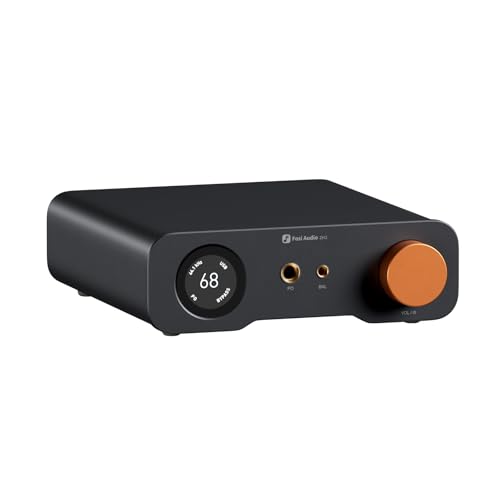
Fosi Audio Balanced DAC and Headphone Amp
Best for: High-power balanced headphone listening
- DAC Chip
- AK4493SEQ
- Digital Inputs
- optical, coaxial, USB
- Connectivity
- RCA, Optical Input, XLR
- Use
- Desktop
- Features
- Amplifier, USB Recording, Remote, Built-in DAC, Balanced Input
- Dimensions
- 9.45 × 11.8 × 2.76 inches
The Fosi Audio ZH3 is a fully balanced desktop DAC and headphone amplifier designed for high-fidelity audio. It uses the AK4493SEQ DAC and XMOS XU316 processor to support PCM 768kHz and DSD512. The unit delivers 2570mW via its 4.4mm balanced output, covering headphones from 16Ω to 300Ω. It includes multiple inputs and outputs, plus bass and treble EQ controls. This device suits listeners who want precise sound customization and high power for demanding headphones.
- Supports PCM 768kHz/32bit and DSD512 decoding
- Delivers 2570mW output on the 4.4mm balanced port
- Includes bass and treble EQ adjustments
- Features six selectable filter types for sound tuning
- Weighs 2.87 pounds, making it heavier than typical compact amps
- Measures 11.8 inches wide, requiring significant desktop space
- EQ adjustments apply only to the headphone output, not the preamp
- You use high-impedance headphones requiring substantial power
- You want to adjust bass and treble levels directly
- You need a balanced 4.4mm output for low noise
- You need a compact unit for limited desk space
- You require EQ control for your speaker outputs
- You prefer a lighter device for easy transport
Verdict: Fosi Audio ZH3 Balanced Desktop DAC offers high power and deep customization for serious listeners. It fits users who prioritize balanced audio quality and adjustable sound profiles over portability.

Fosi Audio 2.1 Channel Bluetooth Amplifier
Best for: 2.1 home theater setups with passive speakers
- Power Output
- 165W x 2 + 350W
- Amplifier Class
- Class-D
- Digital Inputs
- USB, Optical, Coaxial
- Wireless Streaming
- Bluetooth
- Speaker Type
- Passive
- Connectivity
- Bluetooth, Optical Input
The Fosi Audio MC351 is a 2.1 channel stereo power amplifier featuring dual TPA3255 Class-D chips. It outputs 165W x 2 plus 350W for a subwoofer. You get a built-in DAC with Bluetooth, USB, optical, and coaxial inputs. The all-aluminum body weighs 2.2 pounds. It includes bass and treble controls and a vintage VU meter. This setup suits users wanting a complete home theater or HiFi stereo system with high power and versatile connectivity.
- Dual TPA3255 Class-D chips deliver 165W x 2 plus 350W output
- Integrated DAC supports Bluetooth, USB, optical, and coaxial inputs
- All-aluminum alloy CNC body with a 100-fin heatsink
- Bass and treble controls with central detents for tone adjustment
- Heavier build at 2.2 pounds compared to lighter desktop DACs
- 2.1 channel configuration requires a subwoofer for full functionality
- Automatic standby activates after 2 minutes of no signal
- You want a 2.1 home theater setup with a subwoofer
- You need high power output for passive speakers
- You prefer a vintage aesthetic with a VU meter
- You need a compact desktop DAC for headphones only
- You prefer a lighter device under 2 pounds
- You want active speakers that do not require an external amp
Verdict: Fosi Audio MC351 2.1 Bluetooth Amplifier is a powerful 2.1 channel solution for users building a home theater or stereo system with passive speakers and a subwoofer.
Specifications side by side
| Spec | Fosi Audio Balanced DAC and Headphone Amp | Fosi Audio 2.1 Channel Bluetooth Amplifier |
|---|---|---|
| Power Output | – | 165W x 2 + 350W |
| Amplifier Class | – | Class-D |
| DAC Chip | AK4493SEQ | – |
| Digital Inputs | optical, coaxial, USB | USB, Optical, Coaxial |
| Wireless Streaming | – | Bluetooth |
| Speaker Type | – | Passive |
| Connectivity | RCA, Optical Input, XLR | Bluetooth, Optical Input |
| Use | Desktop | – |
| Features | Amplifier, USB Recording, Remote, Built-in DAC, Balanced Input | Amplifier, USB Recording, Built-in DAC |
| Channels | – | 2.1 Channel |
| Recommended Use | – | Stereo |
| Dimensions | 9.45 × 11.8 × 2.76 inches | – |
| Weight | 2.87 pounds | 2.2 pounds |
| Model | ZH3 | MC351 |
Frequently asked questions
Can the Fosi Audio Balanced DAC Headphone Amp drive a subwoofer for home theater use?
No, this unit is not designed for home theater setups. It is a desktop device focused on high-power balanced headphone listening. The Fosi Audio 2.1 Channel Bluetooth Amplifier is the correct choice for home theater. It supports 2.1 channel output for passive speakers and a subwoofer, which the headphone amp does not provide.
Which Fosi Audio amp supports Bluetooth connectivity?
The Fosi Audio 2.1 Channel Bluetooth Amplifier supports Bluetooth. This allows you to stream audio wirelessly from your devices. The Fosi Audio Balanced DAC Headphone Amp does not list Bluetooth in its specifications. It relies on wired connections like RCA, optical input, and XLR for your audio sources.
What is the weight difference between the two Fosi Audio units?
The Fosi Audio Balanced DAC Headphone Amp weighs 2.87 pounds. The Fosi Audio 2.1 Channel Bluetooth Amplifier weighs 2.2 pounds. The headphone amp is slightly heavier, likely due to its larger chassis and internal components for balanced audio processing. The 2.1 channel amp is lighter and more compact for stereo setups.
Does the Fosi Audio Balanced DAC Headphone Amp include a remote control?
Yes, the Fosi Audio Balanced DAC Headphone Amp includes a remote control. This allows you to adjust settings from a distance. The specifications for the Fosi Audio 2.1 Channel Bluetooth Amplifier do not mention a remote. You may need to use the unit's buttons or a connected device to control it.
Which amplifier is better for driving high-impedance headphones?
The Fosi Audio Balanced DAC Headphone Amp is better for high-impedance headphones. It offers high power output via its balanced jack. This makes it suitable for demanding headphones ranging from 16Ω to 300Ω. The 2.1 channel amplifier is designed for passive speakers and a subwoofer, not for direct headphone driving.
What connectivity options are available on the Fosi Audio Balanced DAC Headphone Amp?
The Fosi Audio Balanced DAC Headphone Amp offers RCA, optical input, and XLR connectivity. It also features USB recording capabilities. These inputs allow you to connect various digital and analog sources. The 2.1 channel amplifier uses Bluetooth and optical input, lacking the wired XLR and RCA options found on the headphone amp.
Is the Fosi Audio 2.1 Channel Bluetooth Amplifier suitable for desktop headphone use?
No, it is not suitable for desktop headphone use. This amplifier is designed for stereo setups with passive speakers and a subwoofer. It lacks the dedicated headphone outputs and high-power balanced drive needed for headphones. The Fosi Audio Balanced DAC Headphone Amp is the dedicated desktop solution for your listening needs.


