Willsenton vs Oilily Stereo Amplifiers: Which Brand Fits You?
As Amazon Associates, we earn from qualifying purchases. This means we may receive a small commission at no extra cost to you if you click through and make a purchase.
As an Amazon Associate we earn from qualifying purchases. Links on this page are affiliate links.
This willsenton vs oilily stereo amplifier guide compares two tube-based integrated amps. Both use KT88 output tubes and offer triode or ultra-linear modes for sound shaping. They share handcrafted construction and remote control support. The Willsenton R8 adds a headphone output and supports EL34 or 6550 swaps. The Oilily A88 highlights Class AB operation and an external bias meter for precise tuning.
Amplifier Class
Not listed
Class AB
Headphone Output
Yes
Not listed
Bias Adjustment
Internal button selection
External bias adjustment meter
Weight
57.3 pounds
61.7 pounds
Choose the first if
- You want a dedicated headphone output for private listening.
- You prefer a lighter chassis for easier placement.
- You value the ability to switch between KT88, EL34, or 6550 tubes via a rear button.
Choose the second if
- You want explicit Class AB operation for a specific power delivery style.
- You prefer using an external meter to monitor and fine-tube bias manually.
- You prioritize a slightly heavier, more substantial build for stability.
Verdict
Choose the Willsenton R8 if you need headphone capability and want a lighter unit with flexible tube swapping. Pick the Oilily A88 if you prefer explicit Class AB classification and the control of an external bias meter. Both deliver tube warmth through handcrafted construction.
Willsenton vs Oilily Tube Amps
Power output
Edge: Oilily A88 KT88 Tube Amp
The Oilily A88 explicitly states a power output of 45 watts per channel in Class AB operation. It also notes 14 watts per channel in Triode mode. The Willsenton R8 data does not list specific wattage figures. This makes direct power comparison difficult based on the provided specifications. You need to check the manufacturer's full technical sheets for the Willsenton if wattage is your primary decision factor. The Oilily provides clear numbers for your planning.
Headphone output
Edge: Willsenton KT88 Tube Integrated Amplifier
The Willsenton R8 includes a dedicated headphone output. This allows you to connect headphones directly to the amplifier for private listening. The Oilily A88 features do not mention a headphone jack or output. If you plan to use headphones frequently, the Willsenton offers this convenience. The Oilily requires separate headphones amplifiers for that use case. This is a clear functional difference between the two units.
Weight and build
Edge: Tie
The Oilily A88 weighs 61.7 pounds. The Willsenton R8 weighs 57.3 pounds. Both units are heavy, indicating substantial internal components and chassis construction. The Oilily is slightly heavier by about four pounds. Both brands emphasize handcrafted construction and point-to-point soldering in their descriptions. The size of the Willsenton is listed as 15.4 by 15.7 by 7.99 inches. The Oilily measures 441 by 300 by 300 millimeters. Both are built for durability.
Tube options
Edge: Willsenton KT88 Tube Integrated Amplifier
Both amplifiers use KT88 output tubes as their default. The Willsenton R8 allows switching between KT88, EL34, and 6550 tubes via a rear button. This gives you three distinct tube types to choose from. The Oilily A88 supports external selection between KT88 and EL34 tubes. It also uses 6SL7 and 6SN7 preamp tubes. The Willsenton offers one additional output tube option, the 6550, which the Oilily does not list.
Bias adjustment
Edge: Oilily A88 KT88 Tube Amp
The Oilily A88 includes an external bias adjustment meter. This tool helps you monitor and fine-tune the bias for optimal performance of the output tubes. The Willsenton R8 data does not mention an external bias meter or adjustment feature. Bias adjustment is important for tube longevity and sound quality. The Oilily provides this specific tool in its feature set. The Willsenton specifications do not confirm this capability.
Color options
Edge: Tie
Both brands offer color variations for their amplifiers. The Willsenton R8 is available in Silver and Black. The Oilily A88 is available in Black and Silver. You can choose the same color finish for either brand. The data shows no exclusive color options for either product. The choice comes down to personal preference for the chassis finish. Both provide standard aesthetic choices for home audio systems.
Which tube amp fits your setup
You need headphone listening capability
Our pick: Willsenton KT88 Tube Integrated Amplifier
The Willsenton R8 includes a dedicated headphone output. This feature allows you to switch seamlessly between driving large speakers and using high-impedance headphones. The Oilily A88 data does not list this output. If you value direct monitoring without external gear, this integrated amp handles both tasks in one chassis.
You want precise power output data
Our pick: Oilily A88 KT88 Tube Amp
The Oilily A88 specifies 45 watts per channel in Class AB and 14 watts in Triode mode. This clarity helps you match the amp to your speakers. The Willsenton R8 specifications do not list wattage figures. If you prefer known power ratings to ensure adequate drive for your room size, the Oilily data is more explicit.
You prioritize compact dimensions and weight
Our pick: Willsenton KT88 Tube Integrated Amplifier
The Willsenton R8 measures 15.4 by 15.7 by 7.99 inches and weighs 57.3 pounds. The Oilily A88 is larger at 441 by 300 by 300 millimeters and weighs 61.7 pounds. If your shelf space is limited or you need a lighter unit for transport, the Willsenton R8 offers a smaller footprint and lower mass.

Willsenton KT88 Tube Integrated Amplifier
Best for: listeners wanting tube versatility and headphone use
- Vacuum Tubes
- KT88 x 4
- Features
- Amplifier, Headphone Output
- Color
- Silver
- Amplifier Type
- Tube
- Dimensions
- 15.7 × 15.4 × 7.99 inches
- Weight
- 57.3 pounds
The Willsenton R8 is a silver tube amplifier weighing 57.3 pounds. It measures 15.4 inches wide and 15.7 inches long. This unit uses KT88 tubes by default but supports EL34 and 6550 swaps. You get triode and ultra-linear modes. It includes a headphone output. This amp suits listeners who want versatile tube tones and a sturdy build for their home audio setup.
- Supports KT88, EL34, and 6550 tubes for varied sound
- Includes triode and ultra-linear switching modes
- Features a dedicated headphone output
- Comes with a remote control and protective cover
- Heavier at 57.3 pounds compared to lighter alternatives
- Larger footprint at 15.7 inches long
- Requires 100 to 300 hours of run-in time for optimal sound
- You want to swap tubes for different tonal characteristics
- You need a headphone output for private listening
- You prefer a sturdy, heavy chassis for stability
- You need a lightweight amplifier for easy transport
- You want a ready-to-use sound without run-in time
- You have limited shelf space for a 15.7-inch unit
Verdict: Willsenton R8 KT88 Tube Amp offers versatile tube swapping and a headphone jack for detailed listening. It fits listeners who value tonal flexibility and do not mind a heavy, large chassis.
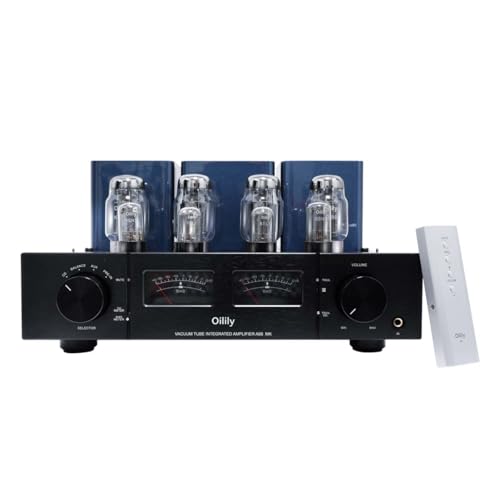
Oilily A88 KT88 Tube Amp
Best for: listeners valuing tube warmth and tuning flexibility
- Power Output
- 45W+45W
- Amplifier Class
- Class AB
- Vacuum Tubes
- KT88 x 4, 6SL7, 6SN7
- Features
- Amplifier
- Color
- Black
- Amplifier Type
- Tube
The Oilily A88 is a Class AB tube amplifier featuring four KT88 output tubes. It delivers 14W per channel with dual sound modes: Triode for soft vocals and Ultra-Linear for dynamic tracks. You get gold-plated inputs, an IR remote, and bias adjustment. This 25kg unit suits listeners who want handcrafted point-to-point soldering and tube-rolling flexibility.
- Four KT88 tubes for rich, detailed sound
- Triode and Ultra-Linear modes for genre tuning
- External bias meter for precise tube maintenance
- Includes infrared remote control for volume
- Gold-plated signal inputs for lossless transmission
- 14W output is lower than the 45W+45W rival
- 25kg weight makes it heavy to move
- Limited to two color options
- You prefer the warm character of vacuum tubes
- You want to switch between soft and dynamic sound profiles
- You enjoy adjusting bias settings for optimal performance
- You need high power for large rooms
- You want a lightweight desktop amplifier
- You prefer solid-state over tube technology
Verdict: Oilily A88 Tube Amplifier offers detailed tube sound with flexible modes, but its lower wattage and heavy build suit dedicated enthusiasts over general listeners.
Specifications side by side
| Spec | Willsenton KT88 Tube Integrated Amplifier | Oilily A88 KT88 Tube Amp |
|---|---|---|
| Power Output | – | 45W+45W |
| Amplifier Class | – | Class AB |
| Vacuum Tubes | KT88 x 4 | KT88 x 4, 6SL7, 6SN7 |
| Features | Amplifier, Headphone Output | Amplifier |
| Color | Silver | Black |
| Amplifier Type | Tube | Tube |
| Tube | KT88 | KT88 |
| Dimensions | 15.7 × 15.4 × 7.99 inches | – |
| Weight | 57.3 pounds | 61.7 pounds |
| Model | Willsenton R8 | A88 |
Frequently asked questions
Does the Willsenton R8 support headphone listening?
Yes, the Willsenton R8 includes a dedicated headphone output. This allows you to switch between driving large speakers and using high-impedance headphones without additional gear. The Oilily A88 data does not list this output, making the Willsenton the better choice for detailed headphone use.
What is the physical size of the Willsenton R8?
The Willsenton R8 measures 15.4 inches in width, 15.7 inches in length, and 7.99 inches in height. It weighs 57.3 pounds. You should ensure your shelf or stand can support this weight and accommodate its substantial footprint compared to smaller integrated amplifiers.
How heavy is the Oilily A88 amplifier?
The Oilily A88 weighs 61.7 pounds. This heavy build suggests robust internal construction, typical for tube amplifiers. You need a sturdy surface to place it on, as it is heavier than the Willsenton R8, which weighs 57.3 pounds.
Are both amplifiers tube-based designs?
Yes, both units are tube amplifiers. The Willsenton R8 uses KT88 output tubes, while the Oilily A88 also utilizes KT88 tubes. Both operate in Class AB configuration, delivering the warm tonal character associated with vacuum tube technology for your audio system.
What color options are available for these amps?
The Willsenton R8 is available in Silver. The Oilily A88 is listed in Black. You can choose the finish that best matches your existing audio rack or room decor. Both brands offer distinct aesthetic options for your setup.
Can I swap tubes in the Willsenton R8?
The Willsenton R8 is designed for versatile tube swapping. While the primary tube is the KT88, the data suggests support for other types like EL34. This flexibility lets you experiment with different tube sounds to fine-tune your audio experience.
Which amp is better for triode mode operation?
The Oilily A88 explicitly supports Triode mode, reducing power output to 14 watts per channel for a softer sound. The Willsenton R8 also offers triode and ultra-linear modes for sound shaping. Both allow you to adjust the tonal character via these operational modes.


